
Is the Hot Needle Test Safe for Gemstones? A 2026 Review
Table of Contents
Is the Hot Needle Test Safe for Gemstones? The Short Answer
What the Hot Needle Test Can and Cannot Prove
How to Tell If a Gemstone Is Real: What the Test Actually Detects
Stone-by-Stone Risk Guide: Which Gems Suffer Most
Mounted Jewelry and Settings: Hidden Damage You Can't See
Safe Ways to Test Gemstones at Home (Without a Flame)
Gemstone Identification Tools: What Professionals Use Instead
Conclusion
Frequently Asked Questions
Last Updated: October 18, 2026
Is the Hot Needle Test Safe for Gemstones? The Short Answer
No. The hot needle test is not safe for gemstones. It is a destructive test that can melt plastic imitations, scorch surface coatings, and crack a real stone through sudden heat.
The idea behind the test is simple. You heat a needle or pin until it glows, then touch it to the stone. If the stone melts, smells like burning plastic, or gives off smoke, it is likely an imitation. Sounds clever.
Here is the part most guides skip: the test only works because it damages something. That is the whole method. A "pass" means you burned your stone.
Below, we explain what the hot needle test can actually prove, which stones suffer most, and how to check authenticity without risking your jewelry.
What the Hot Needle Test Can and Cannot Prove
The hot needle test can confirm one thing: that a material melts, softens, or smells like plastic under heat. It cannot confirm a stone is natural.
That gap matters. A stone that survives the needle is not automatically real. Glass, synthetic gems, and treated stones can also shrug off a quick touch of heat. Passing the test proves the material is heat-resistant, not that it came out of the ground.
What the test can flag:
Plastic imitations that melt or smell like burning resin
Wax or resin fillings that soften and bubble
Surface coatings that blister or peel
What it cannot flag:
Glass made to look like gemstone
Lab-created stones with the same chemistry as natural ones
Heat-treated or fracture-filled stones
Dyes and other treatments that survive a quick touch
That is a narrow diagnostic range for a test that can destroy the item. As the Gemological Institute of America's gem identification resources explain, proper identification relies on measuring optical and physical properties, not on heat.
How to Tell If a Gemstone Is Real: What the Test Actually Detects
The heated needle detects reaction, not identity. When the hot point touches a stone, you watch for melting, softening, smoke, or a plastic odor. Each reaction points to a material type, not a verdict.
Gemstones
Here is what each reaction tends to mean:
Melting or softening: likely plastic, resin, or a composite
Burning plastic smell: a plastic imitation or plastic-backed doublet
Smoke with no visible damage: a coating or filling reacting
No reaction at all: the material is heat-resistant, which tells you very little
The last point is the one people misread. A natural gemstone, a synthetic gemstone, and a piece of glass can all sit there and do nothing. The test stays silent on the question you actually care about.
For a fuller picture, the Federal Trade Commission's jewelry guides set out how gemstone claims should be described and disclosed, which is a better starting point than a flame.
Stone-by-Stone Risk Guide: Which Gems Suffer Most
Risk depends on the stone, but not in the way most guides suggest. The real variables are the stone's composition, its treatment history, and whether it contains fractures, coatings, or assembled layers. A hot needle does not need to melt a gem to ruin it; a sudden temperature change can be enough.
Here is how the main categories stack up, with the mechanism behind each risk.
Stone Type | Heat Risk | What Can Happen | Why |
Amber, jet, pearl, coral | Very high | Cracks, crazing, scorch marks, surface pitting | Organic materials soften and decompose at low temperatures |
Opal | Very high | Crazing, whitening, crack propagation | Water content and internal structure react badly to localized heat |
Emeralds | High | Filling softens, cracks spread, clarity drops | Most emeralds are fracture-filled with resin or oil |
Tanzanite | High | Existing fractures widen, surface damage | Heat-treated and often fractured; sudden heat adds stress |
Coated or dyed stones | High | Coating blisters, peels, or clouds | The color layer is thin and heat-sensitive |
Composite and doublet stones | High | Layers separate, adhesive softens | Assembled stones rely on glue or bonding agents |
Amethyst, citrine, quartz | Moderate | Coating damage, thermal shock cracks | Heat resistance varies with inclusions and coatings |
Sapphire, ruby | Moderate | Thermal shock, coating damage | Tough but not immune to sudden localized heat |
Glass simulants | N/A | The test is aimed at these | Glass may soften or crack, but the result proves little |
Amber and pearl are organic materials, and heat damages them fast. Opal carries water in its structure, and a hot point can trigger crazing that spreads across the surface. Emeralds are commonly fracture-filled, and a hot point can soften that filling, turning a clear stone cloudy. Coated stones lose the layer that gives them their color.
Watch Out Never test a stone that has been treated, coated, filled, or assembled from more than one piece. A hot point can turn a filled emerald cloudy or lift a coating, and the damage is permanent. The same applies to stones with visible fractures, because heat concentrates stress at those weak points.
A common pattern is that the stones most likely to be imitated are also the ones most vulnerable to heat. That makes the test a poor trade: you risk a real stone to catch a fake one.
Mounted Jewelry and Settings: Hidden Damage You Can't See
A mounted stone hides its worst risks. The setting holds heat against the stone, and the metal around it conducts that heat straight into the girdle, the thin edge where a stone is most fragile.

Here is what most people miss. A mounted stone is part of a system, and heat or a slipped needle can damage any part of it:
Prongs and settings: A slipped needle can scratch the metal, loosen a prong, or chip the stone at the point of contact. A loosened prong may not show up until the stone falls out.
Solder joints: Many settings are assembled with solder that has a lower melting point than the metal around it. Localized heat can weaken or pit a joint.
Adhesives: Some settings use glue or epoxy to hold stones or components. Heat softens adhesives, and a stone can shift or come loose.
Adjacent stones: A ring or bracelet often holds more than one stone. Heat conducted through the setting can reach a neighboring stone, including softer or treated stones that were never the target of the test.
Metal finish: Plating, rhodium, and antique finishes can discolor or blister under a flame or hot point.
Heat travels through metal prongs and can crack a stone from the inside, where you cannot see it until the stone falls out. The damage may not show up for weeks, which is why a quick visual check after testing proves nothing.
Pro Tip If you want to know whether a mounted stone is real, take it to a jeweler or gemologist. They can check it with tools that never touch the stone. That is the only way to protect both the gem and the setting.
Testing a mounted stone also raises a practical problem: you cannot inspect the pavilion, the underside of the stone, or the area around the prongs without removing it. A test that damages the setting can cost more to repair than the stone is worth.
Safe Ways to Test Gemstones at Home (Without a Flame)
Safe ways to test gemstones at home skip heat entirely. You can learn a lot from careful observation and simple checks that leave the stone untouched.
Try these first:
Look closely with a loupe. Natural stones often show tiny inclusions, bubbles, or growth lines.
Check the weight in your hand. Many simulants feel lighter or heavier than the real stone.
Feel the temperature. Real stones tend to feel cool to the touch at first.
Look for wear on edges. A coating often wears thin along the sharp edges first.
Compare against a known stone. A reference sample helps you spot color and surface differences.
None of these proves authenticity. They help you build a case. A stone that looks right, feels right, and shows natural inclusions is a better bet than one that fails a flame test and gets ruined in the process.
For a deeper look at home checks, the American Gem Society's consumer guides walk through what shoppers can safely observe.
Key Takeaway The safest home test is the one that leaves the stone exactly as you found it. Observation beats heat every time.
Gemstone Identification Tools: What Professionals Use Instead
Gemstone identification tools measure how a stone behaves with light, not heat. A gemologist uses a refractometer, a polariscope, a spectroscope, and a microscope. Each tool reads a property of the stone without touching it in a damaging way.
These tools answer the questions the hot needle test cannot. They separate natural from synthetic, spot treatments, and confirm the stone's identity. That is why professional assessment is the standard.
What to expect from a professional check:
Refractive index reading to narrow down the stone type
Microscope inspection to spot inclusions and treatments
Spectroscopy to read the stone's color signature
A written opinion you can rely on
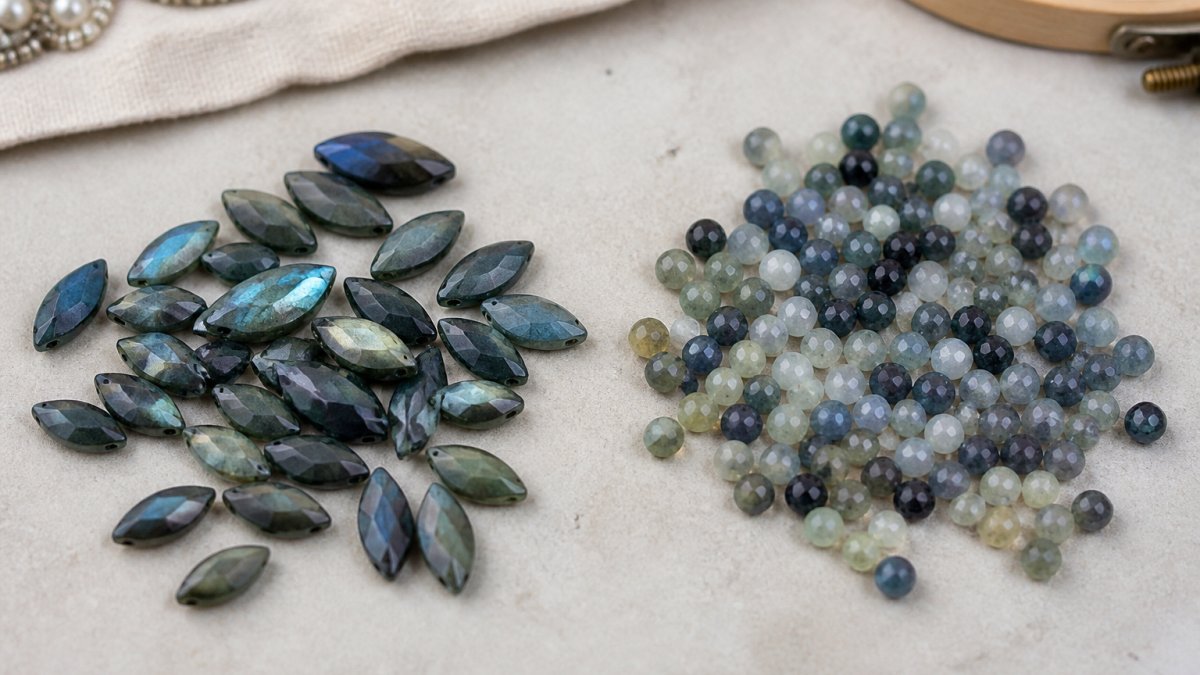
At HietalaJewelry, we source natural gemstone beads in shapes like briolette, rondelle, and marquise, and we know how much a single ruined stone costs a maker. That is why we point buyers toward non-destructive checks, not flames.
Conclusion
The hot needle test trades a small chance of information for a real chance of damage. It can flag a plastic imitation, but it cannot prove a stone is natural, and it can wreck a treated, mounted, or fragile gem in seconds.
If you need to know what a stone really is, use non-destructive checks and let a gemologist confirm it. When you are ready to build with stones you can trust, HietalaJewelry offers natural gemstone beads in a range of shapes, with sale pricing and free delivery within the USA. Browse the collection and start your next design with stones worth protecting.
Frequently Asked Questions
Can a hot needle damage a gemstone?
Yes. The hot needle test is destructive by design, even when it appears to leave no mark. Direct heat can fracture a stone with existing inclusions, melt or scorch a surface coating, soften wax or oil fillings, and leave a permanent hazy spot on softer materials. Mounted stones are especially vulnerable because the setting traps heat against the pavilion. A stone that looks fine afterward may have internal fissures that only show up weeks later when the piece is worn or cleaned.
Which gemstones can be damaged by heat?
Amber, opal, pearl, coral, turquoise, and most porous or organic materials are at high risk from even brief contact with a heated point. Emerald, tanzanite, and other stones with inclusions can crack from thermal shock. Coated or filled stones, including fracture-filled diamonds and coated quartz, may blister or cloud. Quartz, beryl, and corundum are more heat-tolerant, but a hot needle still risks leaving a mark that lowers the stone's value and makes it unsellable at full price.
Can a hot needle test distinguish natural gemstones from synthetic ones?
No. The test only reacts to the material directly under the needle, usually a coating, wax, or plastic surface layer. A lab-created sapphire and a natural sapphire both read the same to a hot needle because both are corundum. The test cannot separate natural from synthetic, detect heat treatment, or confirm origin. For those questions you need a gemologist with a microscope, refractometer, and spectroscopy, not a heated point.
What are safer ways to identify a gemstone?
Start with non-destructive checks: a jeweler's loupe for surface and inclusion patterns, a scale for specific gravity, and a thermal tester for basic thermal feel. For mounted pieces, a loupe inspection of the setting and a review of the seller's disclosure are more useful than any home flame test. If you need certainty, book a professional assessment with a gemologist. For beads and loose stones, buy from suppliers who provide clear treatment and origin information so you are not testing at all.
What is the best tester for gemstones?
There is no single best tester. A refractometer identifies the refractive index of loose stones; a polariscope separates singly and doubly refractive materials; a thermal tester distinguishes diamond from common simulants; and a jeweler's loupe reveals surface coatings and inclusions. For most buyers, the most reliable tool is a gemologist's report. Any tool that relies on heat, scratching, or acid carries a risk of damage and should be used only on stones you can afford to lose.
Read more

Comments