
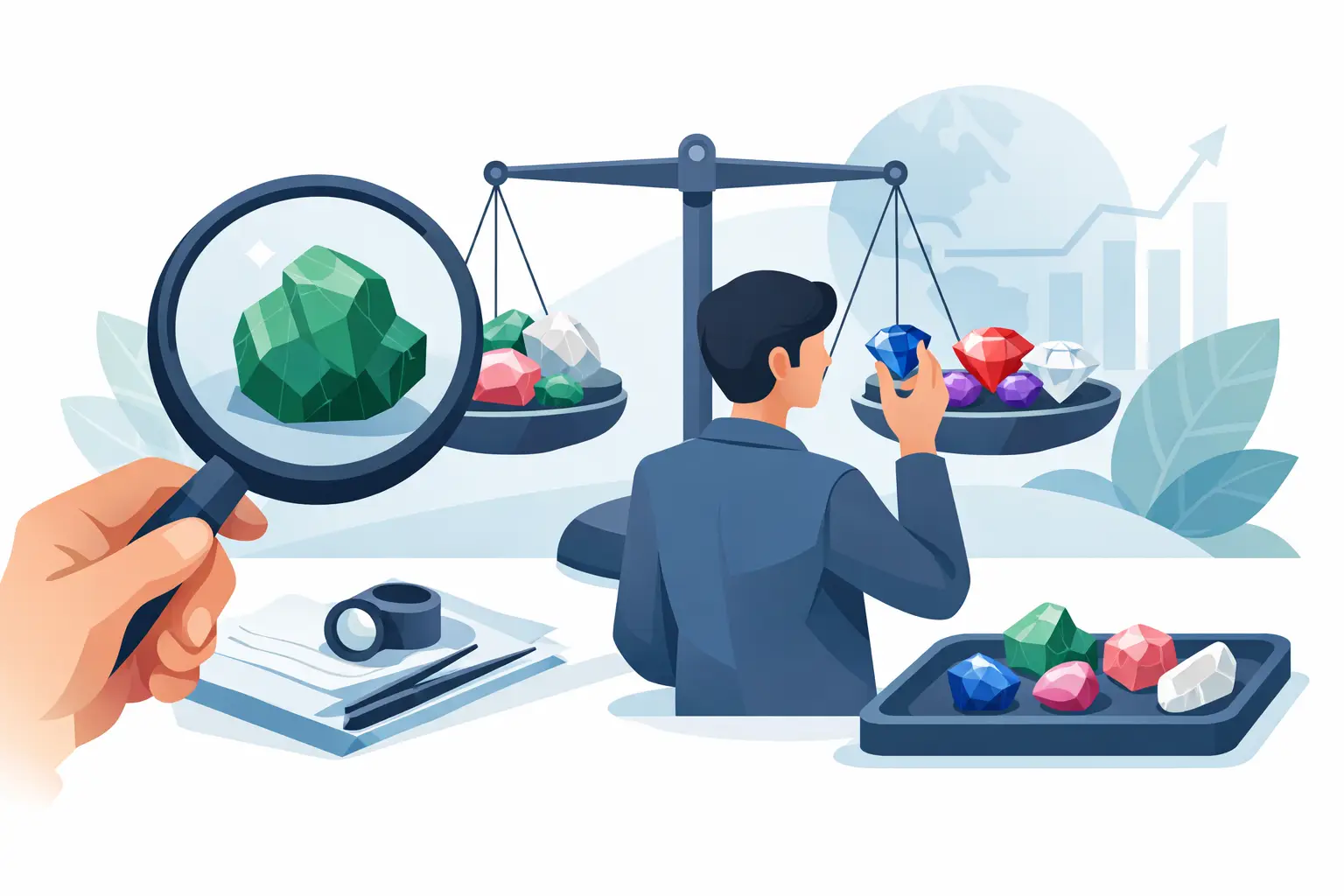
How to Buy Untreated Gemstones Wisely
A sapphire described as “natural” may still have been heated. An emerald can be genuine and still be filled. That is why learning how to buy untreated gemstones starts with one simple truth - natural and untreated are not the same thing.
For anyone shopping for a meaningful ring, a future heirloom, or a loose stone for a custom piece, that distinction matters. Untreated gemstones are valued for their rarity and authenticity, but they also require a more careful eye. The goal is not just to find a beautiful stone. It is to understand what you are paying for, what questions to ask, and when a seller’s language is precise enough to trust.
What untreated really means
An untreated gemstone has not undergone post-mining enhancement intended to improve its color, clarity, or overall appearance. In practical terms, that means no heat treatment in many cases, no fracture filling, no dyeing, and no diffusion or coating. The stone is presented in its natural state, apart from cutting and polishing.
That sounds straightforward, but gemstone terminology can be slippery. “Natural” only tells you the stone was formed by nature rather than created in a lab. It does not guarantee the stone is untreated. “Genuine” is even less useful, because it may simply mean the material is real. If you are specifically trying to learn how to buy untreated gemstones, you need the seller to state treatment status clearly, not rely on broad descriptive terms.
Why untreated gemstones cost more
Untreated stones are often more expensive because attractive material without enhancement is less common. A ruby with strong color and good transparency that has never been heated is genuinely rare. The same is true for certain sapphires, tourmalines, spinels, and other collector-grade gems.
But higher price does not always mean better purchase. Some treated stones are beautiful, durable, and more budget-friendly. Heat treatment, for example, is widely accepted in parts of the trade for sapphires and rubies. If your priority is value and appearance, a treated gem may be the sensible choice. If your priority is rarity, natural character, and long-term collectibility, untreated becomes more compelling. It depends on why you are buying.
How to buy untreated gemstones without relying on guesswork
The most reliable path is documentation, not visual confidence. Even experienced buyers cannot identify every treatment with the naked eye. Some enhancements are subtle, and some stones naturally show characteristics that resemble treatment.
Ask for a lab report
For higher-value purchases, a report from a respected gemological laboratory is the strongest form of reassurance. The report should identify the stone and note whether evidence of treatment is present. This is especially important for sapphire, ruby, emerald, and diamond, where treatment can affect both value and care requirements.
A lab report is not always necessary for every modest purchase, but as price rises, paperwork should rise with it. If a stone is being sold at a premium because it is untreated, the seller should be prepared to support that claim.
Read descriptions carefully
A trustworthy listing should say more than “natural gemstone.” Look for wording that addresses treatment directly, such as “untreated,” “unheated,” or “no indications of enhancement,” depending on the gem type. It should also describe the stone itself - species, carat weight, cut, measurements, and visible characteristics.
Vague language deserves caution. So do listings that emphasize romance and rarity while avoiding specific gemstone details. Fine jewelry should still feel beautiful and personal, but confidence comes from clarity.
Questions worth asking before you buy
When a stone matters enough to mark an engagement, anniversary, or family milestone, it is worth slowing the conversation down. A reputable seller should answer direct questions comfortably.
Ask whether the gemstone has had any treatments at all, whether that conclusion is based on a lab report or the seller’s assessment, and whether the report will be included with purchase. Ask if the stone has inclusions, and if so, whether they affect durability. For mounted gemstones, ask whether the setting limits inspection or future resizing and repair.
These questions are not confrontational. They are the language of an informed buyer.
Which gemstones are commonly treated
Not all gem types carry the same treatment expectations. This is where many first-time buyers get tripped up.
Sapphire and ruby
Heat treatment is common and often accepted in the market. Truly unheated examples usually command a premium, especially when color and clarity are strong.
Emerald
Clarity enhancement with oil or resin is common. An emerald with no clarity treatment is unusual and often priced accordingly. Even treated emeralds can be beautiful, but the degree of enhancement matters.
Diamond
Diamonds may be fracture-filled, laser-drilled, or color enhanced. Natural untreated diamonds remain the benchmark for traditional fine jewelry value.
Quartz, amethyst, tourmaline, jade, and moonstone
Treatment practices vary. Some are sold untreated more frequently, while others may be dyed or otherwise enhanced depending on the material and quality level. That is why gemstone-specific knowledge matters.
If you are comparing stones across categories, avoid assuming one standard fits all. A treatment considered routine in one gem may be highly significant in another.
Beauty in untreated stones often looks different
One of the most valuable shifts a buyer can make is learning to appreciate natural character. Untreated gemstones may show softer color zoning, silk, inclusions, or slight asymmetry in tone. Those features are not always flaws. Sometimes they are part of what confirms authenticity and makes a stone distinctive.
Mass-market jewelry often trains buyers to expect perfection at first glance. Fine gemstones ask for a more thoughtful standard. A stone can be elegant, lively, and deeply valuable without looking unnaturally uniform.
That said, “natural character” should not become an excuse for poor quality. A heavily included stone with weak color should not be overpriced simply because it is untreated. Rarity matters, but so do beauty, durability, and proportion.
Buy from sellers who know their inventory
The safest seller is not the one with the grandest claims. It is the one who can explain the stone plainly. That includes where appropriate details came from, how the gem was evaluated, and why it is priced as it is.
This is where heritage jewelers and gemstone-focused retailers often stand apart from volume-driven marketplaces. When a business is accustomed to describing carat weight, metal type, cut, and natural stone quality with care, the buying experience tends to feel more grounded. At Hietala Jewelry, for example, the emphasis on handcrafted fine jewelry and authentic gemstone descriptions reflects the kind of precision serious buyers should look for.
Pricing signals to watch
If an untreated gemstone is priced dramatically below comparable stones, there may be a reason. It could be heavily included, poorly cut, lacking documentation, or described too generously. Bargains do exist, but untreated rarity rarely sells at deep discount without trade-offs.
On the other hand, very high pricing is not proof of quality either. A seller may charge for the word “untreated” while offering little evidence and mediocre beauty. The strongest purchase sits where documentation, appearance, craftsmanship, and price agree with each other.
Loose gemstone or finished jewelry?
If you are buying a loose gemstone, you have more freedom to inspect the stone, compare reports, and design the final piece around it. This route can be ideal for engagement rings, anniversary gifts, or one-of-a-kind heirloom jewelry.
If you are buying finished jewelry, the process is simpler, but the stone may be harder to evaluate closely once mounted. In that case, the seller’s documentation and reputation matter even more. You are trusting both the gemstone and the craftsmanship holding it.
A good purchase should feel clear
Knowing how to buy untreated gemstones is less about memorizing every gemological term and more about recognizing honest information. Look for exact language, credible documentation, realistic pricing, and sellers who respect your questions. The right stone should offer beauty, but it should also offer peace of mind.
When a gemstone is chosen with care, its value lasts beyond the moment of purchase. It becomes part of a story someone will wear, remember, and perhaps pass on.


Comments