
Crystal Grids for Meditation Space: A Practical Setup Guide
Last Updated: November 22, 2026
Quick Summary
Crystal grids are arrangements of stones on a flat surface, set up with a clear intention and a geometric layout. To set one up, pick a quiet spot, choose three to five stones that match your goal, place a central stone, and surround it with the rest in a pattern.
Write your intention in one short sentence before choosing any stones.
Use one central stone and four to eight surrounding stones on a clean, flat surface.
Keep the grid away from direct sun for long periods, since strong light can fade some stones.
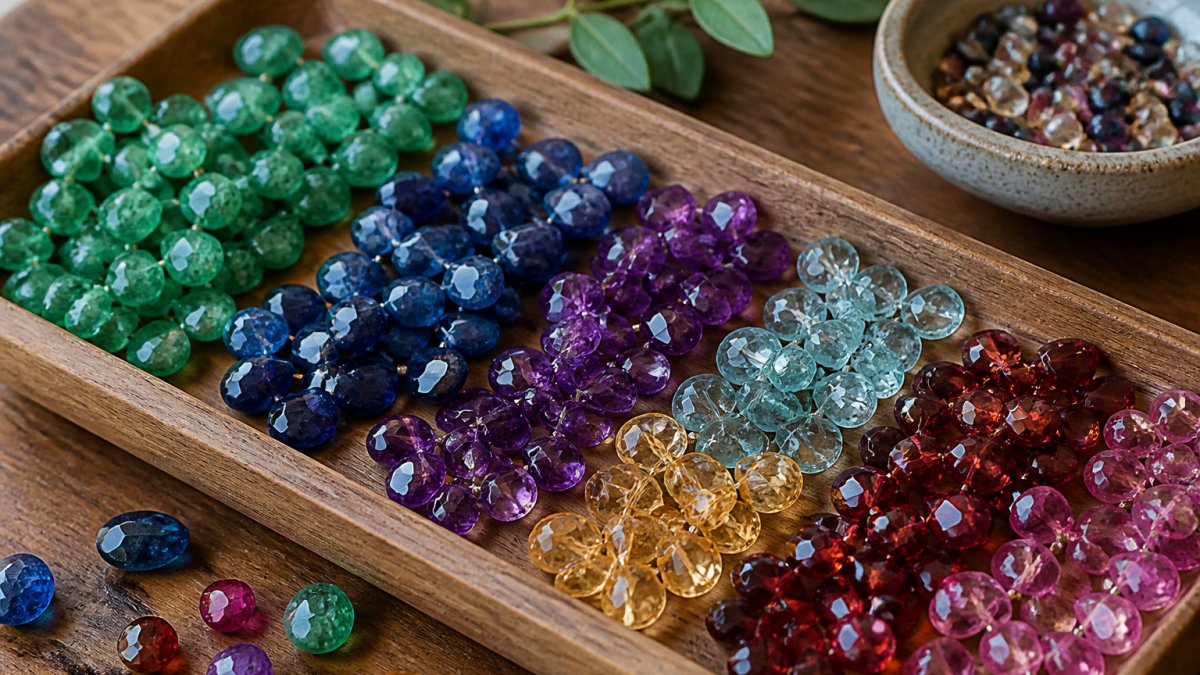
Amethyst, lapis lazuli, and sapphire are popular choices for calm and focus.
Clean stones gently with a soft, dry cloth and avoid soaking them in water.
Need stones for your grid?
HietalaJewelry offers natural gemstone beads in briolette, rondelle, and marquise shapes.
Table of Contents
How Do You Set Up Crystal Grids for a Meditation Space?
A crystal grid is a simple arrangement of stones on a flat surface, set up with a clear intention and a geometric layout. To set one up, pick a quiet spot, choose a few stones that match your purpose, place a central stone, and surround it with the rest in a pattern you like. This guide walks you through each step.
Start with a clear intention. Write it down in one short sentence, such as "calm focus during evening meditation." This sentence guides every choice that follows.
Then work through the setup:
Pick a clean, flat surface like a wooden board or a cloth
Choose one central stone and four to eight surrounding stones
Place the central stone first, then arrange the rest in a pattern
Sit with the grid for a few minutes before you meditate
Watch out: Do not set a grid in direct sun for long periods. Strong light can fade some dyed or treated stones.
What a Crystal Grid Is and How It Works
A crystal grid is a set of stones arranged in a pattern, used as a focus point during meditation or quiet reflection. Read how to program your crystals for specific intentions to see how the stones are aligned to a purpose. Many people use crystal grids to mark a space for calm and intention.
The grid works mainly as a focus tool. The shape and placement give your attention a clear structure. When you look at the arrangement, you return to your intention.
It helps to know the parts of a grid:
Central stone: the main point that anchors the whole pattern
Surrounding stones: smaller or matching stones placed in a shape
Board or base: the surface that holds the layout
Intention: the purpose you set before you begin
Crystal grids are a personal practice, not a scientific tool. Many businesses and practitioners describe them as a way to build a meditation habit. Treat any claims about specific outcomes with care.
Choosing the Best Crystals for Meditation Space Grids
The best stones for a grid depend on your goal and on how well the stone looks and feels to you. For calm and focus, popular choices include amethyst, lapis lazuli, and sapphire.
Amethyst is a common pick for quiet meditation. Our guide to how to grade amethyst beads for jewelry making explains what to check when you buy.
Lapis lazuli has a deep blue color with gold flecks. It is a favorite for grids meant to support focus. Learning to tell it apart from dyed stones helps you avoid fakes. Read more about lapis lazuli vs dyed jasper to see the difference.
For authentic lapis, start with trusted sources to buy authentic lapis lazuli beads. Sapphire is another option.
Keep the choice simple. Learn how to spot fake sapphire beads with magnification before you add any sapphire to your grid. Pick three to five stones that fit one goal. Too many stones can make the grid feel busy.
Crystal Grid Templates: Geometry Patterns Matched to Your Goals
A useful approach is to match a specific layout to a specific meditation goal, with a stone count and spacing you can copy. Below are four layouts that cover the most common meditation goals. Each assumes a flat board or cloth at least 8 inches across and stones between 0.5 and 1 inch wide.
Focus grid (circle with a center stone and six around it). Place the central stone in the middle. Arrange six surrounding stones in a circle at equal distance, roughly 2 to 3 inches from the center. This is the simplest layout to keep symmetrical, and the even spacing gives your eye a predictable path back to the center. Use it when your goal is sustained attention on one object or breath.
Relaxation grid (spiral of seven stones). Start with the central stone, then place the remaining six in a loose spiral that widens outward, with each stone about 1.5 inches from the last. A spiral invites a slower, wandering gaze rather than a fixed point, which many practitioners find easier to settle into before sleep or evening meditation. Keep the spiral open at the outer end so it does not read as a closed loop.
Grounding grid (square with a center and four corners). Place the central stone, then four stones at the corners of an imaginary square about 4 inches on each side. The square reads as stable and contained. This layout works well on a low table where you sit cross-legged and look down at the grid, because the four corners frame the center from any seated angle.
Habit grid (simple line of five stones). Place five stones in a straight line, 1 inch apart, with the middle stone slightly larger if you have one. A line is the easiest layout to reset each day and the least likely to be disturbed in a small space. Use it when the goal is simply to show up for practice rather than to hold a complex intention.
A few practical notes apply to all four. Keep the outer stones the same size so the pattern reads clearly. If your board has a printed template, follow it for the first few sessions, then adjust spacing to what looks even to you. Sacred geometry is interpreted differently by different users, so choose a pattern because it looks balanced and fits your room, not because a particular shape is required. You do not need an advanced design to start, and a layout you can rebuild in under two minutes is more likely to become a habit than an elaborate one you avoid setting up.

The article describes four layouts, each suited to a different meditation goal. The table below summarises them so you can pick one quickly.
Layout | Best for | Key difference |
Focus grid (circle) | Sustained attention on one object or breath | Center stone with six stones in a circle, 2 to 3 inches out |
Relaxation grid (spiral) | Settling in before sleep or evening meditation | Seven stones in a loose spiral, about 1.5 inches apart |
Grounding grid (square) | A stable, contained feel when seated low | Center stone with four corner stones on a 4-inch square |
Habit grid (line) | Showing up daily with a simple setup | Five stones in a straight line, 1 inch apart |
How to Use a Crystal Grid Board Step by Step
A grid board gives you a fixed layout to follow. Using one makes setup faster and more repeatable. The steps below work for most boards.
Clear the surface and wipe the board clean.
Set your intention in one short sentence.
Place the central stone in the middle of the board.
Arrange the surrounding stones around it, keeping equal spacing.
Sit back and look at the full grid for a moment.
Begin your meditation, returning to the grid as needed.
Most people keep the grid in place for one session or one week. Then they rearrange it for a new intention.
Materials Checklist for a Beginner Setup
Gather these items before you start:
A grid board or a flat cloth
One central stone
Four to eight surrounding stones
A small notebook for your intention
A quiet place to sit
A soft cloth to clean the stones
Placing the Grid in Your Room
Put the grid where you sit most often. A low table or a shelf at eye level works well. Avoid busy walkways, where the grid could be bumped or moved. Keep it away from direct sun and heat.
Care, Duration, and Dismantling Your Grid
Clean the stones gently with a soft, dry cloth. Avoid harsh cleaners and soaking, since some stones can be damaged by water or chemicals (gia.edu). Check each stone for chips after you handle it.
Longer setups can collect dust, so plan to refresh the grid as needed. When you are done, take the stones down one at a time, starting with the outer ones. Store them separately in a soft pouch or box.
Dismantling is also a good time to reflect. Note what you noticed during the practice in your notebook.
Setting Up Your First Grid Board at Home
Your first grid does not need to be perfect. Start small, with one clear intention and three to five stones. Use the checklist above, follow the steps, and sit with the grid for a few minutes.
After a few sessions, you will know which stones and patterns feel right for you. Adjust as you learn. HietalaJewelry offers natural gemstone beads in shapes like briolette, rondelle, and marquise. Visit our site to browse options and check current pricing, which depends on quantity, timing, and delivery. Free delivery applies within the USA.
Frequently Asked Questions
What crystal is best for meditation?
Clear quartz, amethyst, and lapis lazuli are among the most common choices for meditation, because people often pick them for calm focus and a sense of clarity. The best stone is usually the one that matches your intention and that you find pleasing to hold. Start with one or two stones you already like, keep the set small, and add more only when your practice calls for it. Natural gemstone beads, such as HietalaJewelry's lapis lazuli and amethyst selection, can be a way to source stones for personal or commercial projects. Pricing depends on quantity, dates, and delivery, so check the website for current pricing.
Do you need to cleanse crystals before making a grid?
Many practitioners cleanse crystals before placing them in a grid, usually by rinsing them in water or letting them rest in natural light, then wiping them dry. Cleansing is a ritual choice rather than a physical requirement, so you can skip it if it does not fit your practice. If you are working with new stones from a supplier, a quick wipe with a soft cloth removes dust and handling residue. Whatever method you use, keep it consistent so the grid feels like part of your routine.
Where should you place a crystal grid in a meditation space?
Place the grid where it is visible from your usual meditation seat but out of the way of foot traffic. A shelf, low table, or corner of the room near your cushion works well. Avoid placing it directly in sunlight for long periods if you use stones that can fade, and keep it away from the edges of tables where it could be knocked over. The goal is a stable, uncluttered spot that you pass or see regularly, so the grid becomes a reminder of your intention.


Comments