
Are Gemstone Beads Safe Stored Together?
Quick Summary
Storing gemstone beads well means keeping each bead separate from harder stones, metal findings, light, and moisture. Store loose beads in their own pouches or compartments, keep finished jewelry apart from them, and label every container.
Keep loose beads and finished jewelry in separate containers to prevent scratches.
Avoid PVC bags and soft vinyl pouches for long-term storage, since plasticizers can migrate onto stones.
Store porous stones in breathable cotton pouches rather than sealed plastic.
In humid conditions, add a silica gel packet to the outer box.
Check foam-lined boxes annually and replace any degraded inserts.
Table of Contents
Are Gemstone Beads Safe Stored Together?
Last Updated: October 29, 2026
Why Storing Gemstone Beads Properly Matters
Gemstone beads are not all equally tough. Some stones can scratch softer ones, and a bead that rubs against a harder neighbor can chip or dull over time. Storing gemstone beads together carelessly can cost a strand its shine within a season.
At HietalaJewelry, we sell natural gemstone beads in shapes like briolette, rondelle, and marquise. Good storage is the simplest way to protect your investment.
Gemstone beads are natural stones, so they can scratch, chip, and fade if stored badly. The good news is that most damage is easy to prevent with a few smart habits.
Storing beads in a single tangled pile can cause harm. Stones knock together, edges catch, and a single drop can crack a delicate briolette.
Here is the core idea: protect each bead from contact, light, and moisture. Once you do that, storage becomes a routine instead of a chore.
Separate Beads and Finished Jewelry to Prevent Scratches
Loose beads and finished jewelry should never share a space. Browsing loose briolette beads shows how these stones are sold and handled before they are stored. A loose bead has bare, unprotected edges. A finished piece may have metal clasps, wire, or setting prongs that scratch soft stones.
Keep these items apart:
Loose beads in their own pouches or compartments
Finished necklaces and bracelets in separate sections
Metal findings in a closed container
Separation is especially important for stones that sit low on the hardness scale. Softer stones show scratches far faster than quartz or sapphire.
Watch out: Never toss a finished pendant in with loose beads. A metal bail can leave visible marks on a soft stone in just a few days.
Choosing the Best Containers for Storing Beads
The right container depends on how many beads you store, how often you use them, and what the beads are made of. For most makers, a mix of options works best, but not every bag, box, or liner is safe for every stone.

Safe materials to look for:
Untreated cotton or linen pouches, soft, breathable, and non-abrasive; good for most polished stones
Acid-free, lignin-free tissue and boxes, labeled as archival or museum-quality; safe for long-term storage of sensitive stones and metal components
Polyethylene (PE) zip-lock and mini-grip bags, generally inert and fine for short- to medium-term storage of loose beads
Soft-lined compartment trays with removable cups, keep beads from rubbing and let you lift one group without disturbing the rest
Materials to use with caution:
Polyvinyl chloride (PVC) bags and soft vinyl pouches, can contain plasticizers that migrate onto stone surfaces and metal findings over time; avoid for long-term storage
Foam inserts (polyurethane or polystyrene), may crumble, yellow, or off-gas as they age; check foam-lined boxes annually and replace degraded inserts
Dyed or printed fabrics and papers, dyes and inks can transfer to porous stones such as turquoise, lapis lazuli, and malachite, especially in humid conditions
Adhesive-backed labels applied directly to bags holding porous stones, residue and adhesive can migrate; label the outside of a secondary container instead
Matching container to bead type:
Loose drilled beads in bulk: small PE zip-lock bags grouped by size and shape, stored inside a rigid outer box
Delicate cut beads (briolettes, marquise points): individual soft pouches or compartment cups with a padded base so points do not bear weight
Porous or treated stones: breathable cotton pouches rather than sealed plastic, so residual moisture can escape
Finished jewelry with silver findings: acid-free pouches or tarnish-resistant cloth, kept separate from loose beads and metal stock
Practical checks before you buy:
Smell the container, a strong plastic or chemical odor suggests off-gassing; skip it
Flex the bag or liner, if it feels tacky or leaves a residue on your fingers, it is not inert
Confirm archival labeling on any paper product that will touch stones or metal
Prefer containers with smooth, rounded interior corners over sharp molded edges that can chip beads
Watch Out Sealed plastic bags can trap moisture, so in humid conditions consider adding a silica gel packet to the outer box.
Label every container on the outside so you never have to dig through a pile to find a match. A small index card or printed label on the lid works better than writing on the bag itself.
The right container depends on the beads and how you use them. Here is how the main options compare.
Container | Best for | Key difference |
Untreated cotton or linen pouches | Most polished stones | Soft and breathable |
Acid-free archival tissue and boxes | Sensitive stones and metal parts | Archival or museum-quality labeling |
Polyethylene zip-lock bags | Short to medium-term loose beads | Generally inert |
Soft-lined compartment trays | Organizing groups of beads | Removable cups keep beads from rubbing |
PVC bags and soft vinyl pouches | Avoid for long-term storage | Plasticizers can migrate onto stones |
Foam inserts | Check and replace annually | May crumble, yellow, or off-gas with age |
How to Organize Beads for Jewelry Making
Organization saves time and protects your stones. A clear system also helps you spot damage early.
A simple workflow:
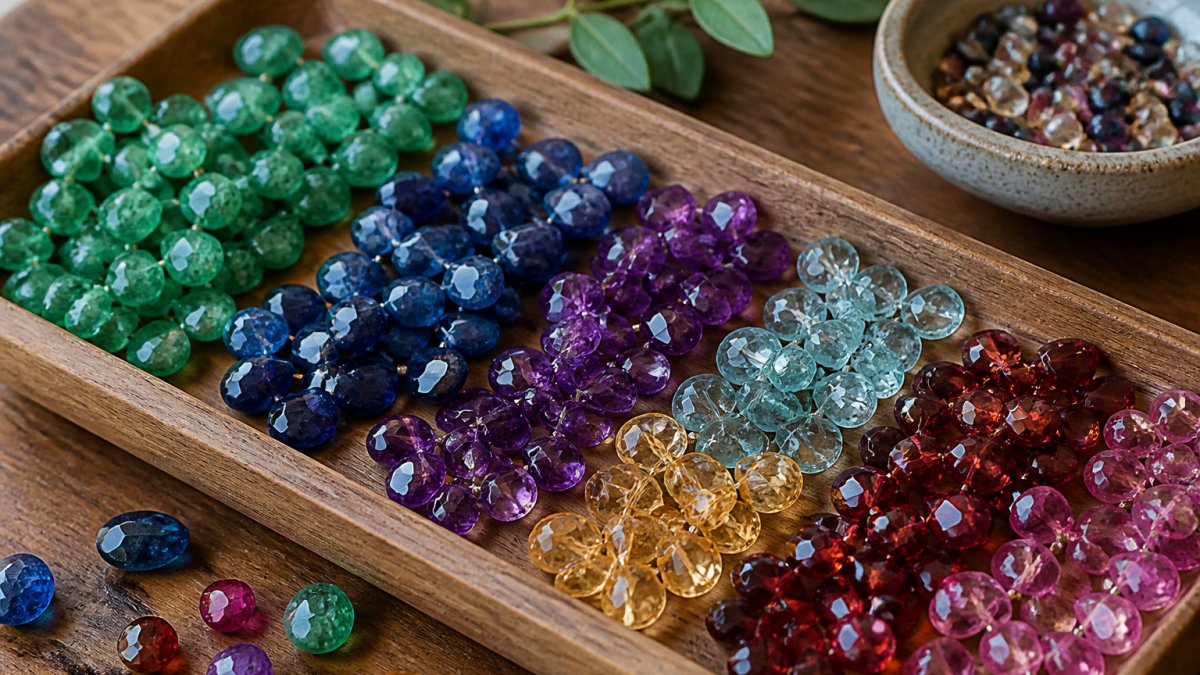
Sort beads by shape, such as rondelle, briolette, or marquise
Group beads by size within each shape
Place each group in a labeled pouch or compartment
Store the groups in a single bin or drawer
Check each group once a season for wear
Sorting by stone type works too, especially if you use several gemstones. Keep softer stones in their own section, away from harder ones.
A labeled system can reduce the time spent searching for beads. You can also browse rondelle gemstone beads to see how this shape is supplied and sorted.
Storage Guidance by Gemstone Hardness and Material
Not every gemstone needs the same care. Hardness matters most, followed by toughness (resistance to chipping and breaking), how the stone is cut, and whether it has been treated or is porous. A guide to choosing semi precious stones and beads that last explains how color, cut, and treatment affect durability.
Hardness reference points (Mohs scale):
Soft (Mohs 1-5): talc, gypsum, calcite, fluorite, apatite, orthoclase, scratch easily; keep isolated
Medium (Mohs 5-7): lapis lazuli (~5-6), turquoise (~5-6), opal (~5.5-6.5), moonstone (~6-6.5), amethyst and quartz (~7), scratch from harder neighbors and metal
Hard (Mohs 7-9): quartz varieties, garnet (~6.5-7.5), topaz (~8), corundum (ruby and sapphire, ~9), resist scratching but can still chip at cut edges
Why hardness alone is not enough: Diamond is the hardest mineral but chips along cleavage planes. Emerald (Mohs ~7.5-8) is relatively hard yet brittle and prone to chipping at facet edges. A hard stone stored loosely against another hard stone can still abrade, and a brittle stone can crack from a short drop even inside a pouch.
Storage by stone type:
Soft and porous stones (lapis lazuli, turquoise, malachite, opal): store in individual soft pouches or lined cups; avoid sealed plastic, dyed fabrics, and direct contact with metal; keep away from heat and dryness
Medium-hardness stones (amethyst, moonstone, quartz): separate from harder stones and metal findings; soft pouches or compartment cups are sufficient
Hard stones (sapphire, ruby, topaz, garnet): soft pouches are fine, but keep them away from metal clasps and prongs that can still mark polished surfaces over time
Brittle or cleavage-prone stones (emerald, tanzanite, kunzite): wrap individually with padding; avoid stacking weight on top; do not coil tightly
Cut-edge briolettes and marquise points: wrap individually or seat in a padded cup so the point bears no load
Organic materials (pearl, coral, amber, jet): keep away from heat, dryness, and sealed plastic; use breathable pouches and avoid contact with perfumes and oils
Treated stones: Stones that have been fracture-filled, dyed, coated, or heat-treated may be more sensitive to heat, solvents, and prolonged moisture. Store them as you would the base material, and avoid ultrasonic or steam cleaning unless the treatment is confirmed stable.
Pro Tip A simple rule: if you would not store two stones in the same pocket, do not store them in the same compartment. When in doubt, separate by hardness tier and by cut type.
Avoid anything with a sharp corner pressing into a stone. Even harder stones can show wear from constant friction, and a padded, separated container is the cheapest insurance against a chipped point or a dulled facet.
Protecting Beads From Sunlight, Heat, and Humidity
Sunlight, heat, and moisture all affect gemstone beads. Some stones fade with long light exposure, and extreme heat can crack treated stones.
Store your beads in a cool, dry spot away from direct sun. A closet shelf or drawer works better than a sunny windowsill. Keep an eye on humidity, since damp air can cause metal findings to tarnish and string materials to weaken.
A few habits help:
Keep containers closed when not in use
Add a small silica gel packet to a sealed box in humid months
Never leave beads in a hot car
Clean and dry your beads before storing them. Oils and dust build up over time and dull the surface.
How to Store Beaded Necklaces Without Damage
Finished necklaces need a different approach. Tangles and kinks are the main risks, and strings can stretch or snap under pressure.
Lay necklaces flat or hang them on a soft hook to avoid tangles. To see what makes a bead bracelet well made and long-lasting, read choosing a smoky quartz bead bracelet that lasts.
For best results:
Store each necklace in its own soft pouch
Keep clasps closed to prevent snags
Hang longer strands rather than folding them
Check the knotting and strings every few months. Replace any worn thread before it breaks and scatters your beads.
Set Up Your Bead Storage Routine With HietalaJewelry Stones
A good storage routine takes about an hour to set up and a few minutes each month to maintain. Start by sorting your current stock, then choose containers that match your collection. Label everything, and schedule a quick check each season.
Natural gemstone beads, from briolette to rondelle, benefit from careful handling. For current pricing and availability, visit HietalaJewelry's website or request a quote directly. Pricing depends on quantity, timing, and delivery options.
Frequently Asked Questions
Can gemstone beads scratch or chip when stored together?
Yes. Hard stones can scratch softer stones when they rub against each other, and brittle beads can chip if they knock together repeatedly in a loose pile. Keeping beads separated reduces this wear.
Should gemstone beads be stored in plastic bags or fabric pouches?
Storing beads in separate containers can keep them organized and reduce contact between stones.
Can sunlight or humidity damage gemstone beads?
Direct sunlight and heat can affect some gemstones over time, so storing beads in a cool, dry place is a sensible precaution.
What is the best container for storing gemstone beads?
The best container depends on your collection size. Whatever you choose, make sure it is clean and dry, and label each compartment with the stone type and size so you can find beads quickly.
Comments