
Best Natural Gemstone Beads for Delicate Necklaces
Table of Contents
What Makes Natural Gemstone Beads Right for Delicate Designs
Bead Size and Proportion for Dainty Necklaces
Stone Hardness and Durability on the Mohs Scale
7 Best Natural Gemstone Bead Suppliers for Delicate Necklace Designs
How We Evaluated These Suppliers
1. HietalaJewelry: Specialty Shapes in Authentic Stones
2. Fire Mountain Gems: Massive Inventory and Wholesale Tiers
3. The Bead Traders: Quality Control and Buying Guides
4. Youngbling: Fast Shipping for Practice Projects
5. PotomacBeads: Tutorials Paired with Curated Collections
6. GemsBiz: Trending Stones for Modern Designs
7. Fine Gems Canada: Soft Tones for Neutral Collections
Delicate Necklace Design Techniques for Gemstone Beads
Color Palettes and Gemstone Pairings
Drill Hole Size and Stringing Compatibility
How to Wire Wrap Gemstone Beads for Dainty Necklaces
Essential Tools for Wire-Wrapped Necklace Making
Step-by-Step Wire-Wrapping for Small Beads
Best Stringing Materials for Delicate Necklaces
Weight, Drape, and Clasp Selection
How to Identify High-Quality Natural Gemstone Beads
Natural vs. Synthetic vs. Treated Stones
Inspecting Luster, Translucency, and Consistency
Which Supplier Should You Choose for Your Next Project?
Frequently Asked Questions
Last Updated: October 4, 2026
What Makes Natural Gemstone Beads Right for Delicate Designs
Natural gemstone beads are small, polished stones cut from real minerals, and they work best in delicate necklace designs when their size, hardness, and finish match the lightness of the piece.
The difference between a necklace that lasts and one that clouds over after a month comes down to stone selection. Soft stones scratch. Chalky stones absorb oils.
Below, we break down the sizing, stringing, and wire-wrapping decisions that keep a delicate piece from falling apart.
Bead Size and Proportion for Dainty Necklaces
A delicate necklace lives or dies by proportion. Beads between 2 mm and 6 mm read as dainty; anything above 8 mm starts to look chunky on a fine chain.
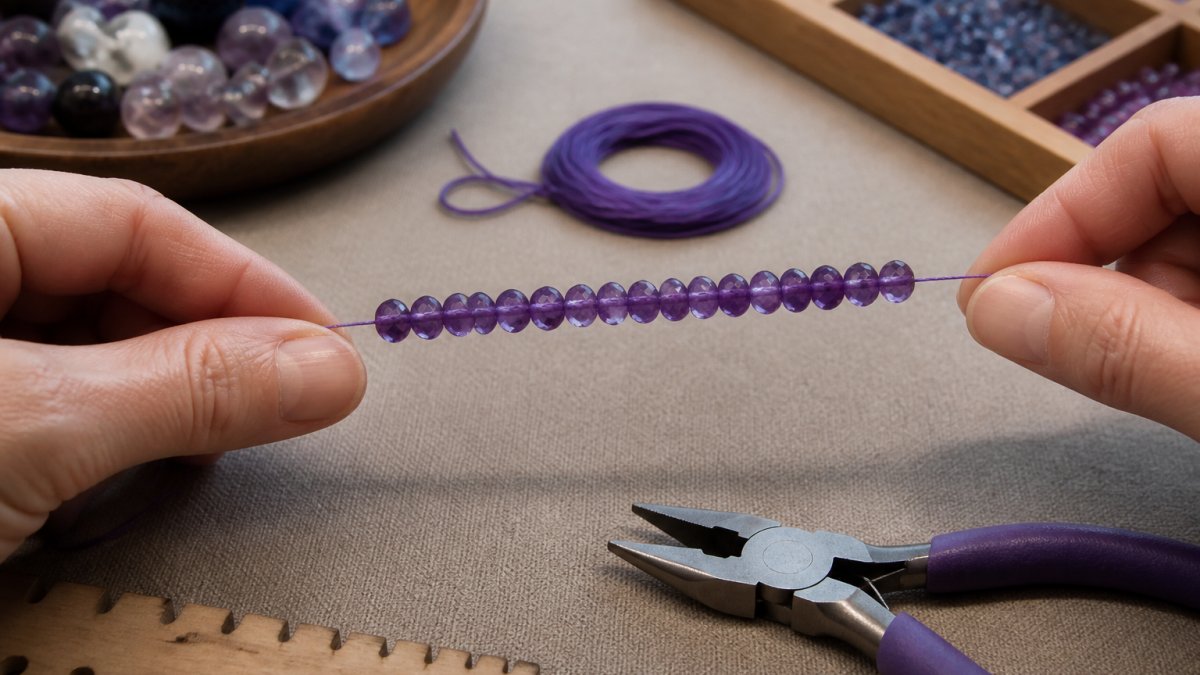
For a Y-necklace or a simple pendant strand, we lean toward 3 mm to 4 mm rondelles. They add color without weight.
Pro Tip String a test section of 10 beads before committing to a full strand. Weight and drape change dramatically once the piece is on a neck, and a strand that feels fine on the mat can pull the chain forward once worn.
Stone Hardness and Durability on the Mohs Scale
The Mohs scale measures mineral hardness from 1 (talc) to 10 (diamond), and it predicts how well a bead survives daily wear.
Quartz, agate, and jasper all sit at 6.5 to 7, which makes them safe for everyday pieces.
Here's the part most guides skip: hardness is not the same as toughness.
7 Best Natural Gemstone Bead Suppliers for Delicate Necklace Designs
The best supplier for delicate work balances stone quality, shape variety, and consistent sizing, not just price.

How We Evaluated These Suppliers
Supplier | Best For | Standout Strength | Watch Out For |
HietalaJewelry | Specialty shapes, authentic stones | Briolette, rondelle, marquise cuts | Niche inventory |
Fire Mountain Gems | Bulk buying | Huge catalog, wholesale tiers | Overwhelming for beginners |
The Bead Traders | Guided selection | Buying guides, consistent sizing | Higher entry price |
Youngbling | Fast practice projects | Quick shipping, common stones | Limited sourcing detail |
PotomacBeads | Learning while buying | Tutorials, accurate photos | Split retail focus |
GemsBiz | Trend-led designs | Popular stone supply | Fewer rare stones |
Fine Gems Canada | Neutral collections | Soft tones, expert advice | Limited rare stock |
1. HietalaJewelry: Specialty Shapes in Authentic Stones
HietalaJewelry's catalog centers on shapes that are ideal for delicate necklace work: briolette, rondelle, and marquise cuts in lapis lazuli, amethyst, and sapphire.
What sets it apart is the shape focus.
The inventory is curated. For the shapes and stones that suit delicate designs, though, it is an excellent choice.
2. Fire Mountain Gems: Massive Inventory and Wholesale Tiers
Fire Mountain Gems carries one of the largest gemstone bead inventories anywhere, with wholesale pricing for bulk buyers. If you need turquoise, amethyst, or labradorite across many sizes, it is all in one place.
The tradeoff is scale. The catalog is so large that beginners often waste time filtering. Product specs include bead size and hole diameter, which helps, but you need to know what you are looking for before you start browsing.
3. The Bead Traders: Quality Control and Buying Guides
The Bead Traders pairs a solid stone selection with educational buying guides on faceted versus smooth finishes. Quality control is the real strength: sizing stays consistent across common stone types like agate, jasper, and quartz.
Expect a higher starting price than mass-market sellers. You are paying for reliability and guidance, which matters most when you are stringing a commercial run.
4. Youngbling: Fast Shipping for Practice Projects
Youngbling sells polished round gemstone beads through major e-commerce platforms, with fast shipping that suits quick turnaround. Standard 15-inch strands and common stones like jasper make it a reasonable choice for practice pieces.
Sourcing detail is thin, so treat it as a convenience option rather than a premium one. It works well when you need beads this week and the design is simple.
5. PotomacBeads: Tutorials Paired with Curated Collections
PotomacBeads combines retail with instruction. Curated collections match specific design aesthetics, and the product photography represents color accurately, which matters when you order online.
The split focus between teaching and selling means neither is as deep as a specialist. If you want to learn a technique while buying materials in one stop, it earns its place.
6. GemsBiz: Trending Stones for Modern Designs
GemsBiz focuses on the top trending gemstone types, with a steady supply of popular stones like ruby and emerald. Its blog covers gemstone properties in useful detail.
Variety thins out for niche or rare stones. If your designs follow current trends, it keeps you stocked; if you work in rare materials, look elsewhere.
7. Fine Gems Canada: Soft Tones for Neutral Collections
Fine Gems Canada leans into soft, neutral palettes: rose quartz, moonstone, and aquamarine. Its guidance on balancing bold versus delicate designs is genuinely useful for building a cohesive collection.
Availability of extremely rare stones is limited. For a neutral, delicate line, the focus is a feature rather than a flaw.
Delicate Necklace Design Techniques for Gemstone Beads
Design technique decides whether a delicate necklace looks intentional or accidental. Three decisions matter most: color pairing, drill hole size, and stringing method.
Color Palettes and Gemstone Pairings
Stick to two or three stone colors per piece. A common approach pairs one saturated stone with two neutral ones: lapis lazuli beside moonstone and clear quartz, for example.
Tonal pairing works well for minimalist pieces. Rose quartz, aquamarine, and moonstone sit in the same soft range and layer cleanly.
Monochrome: one stone, varied sizes and cuts
Analogous: neighboring tones, such as blue and green
Contrast: two opposing colors, used sparingly
Drill Hole Size and Stringing Compatibility
Bead hole size is the most overlooked spec in jewelry making. A hole that is too small will not fit your stringing material; a hole that is too large lets beads wobble and wear against each other.
Match the hole to the cord. Beading wire comes in diameters measured in inches, and most delicate work uses the finer gauges.
How to Wire Wrap Gemstone Beads for Dainty Necklaces
Wire wrapping is the technique of securing a bead with wire loops rather than threading it on a cord, and it gives small beads a finished, hand-crafted look. It suits briolettes especially well, since the wire holds the top of the drop in place.
Essential Tools for Wire-Wrapped Necklace Making
You need less than you think to start:
Round-nose pliers for forming loops
Chain-nose pliers for gripping and bending
Flush cutters for clean wire ends
Watch Out Cutting wire with standard scissors leaves burrs that snag clothing and skin. Use flush cutters and squeeze the cut end flat with chain-nose pliers before you finish the piece.
Step-by-Step Wire-Wrapping for Small Beads
Thread a short length of wire through the bead hole.
Pull both ends even and cross them above the bead.
Twist the two wires together for two or three turns, close to the bead.
Trim one wire and bend the remaining end into a loop with round-nose pliers.
Wrap the tail neatly around the base of the loop.
Trim flush and press the end flat.
Expected result: a secure loop that sits centered on the bead and holds its shape under gentle pull.
Best Stringing Materials for Delicate Necklaces
The right stringing material for a delicate necklace is flexible, thin, and strong enough to carry the bead weight without stretching. Most makers choose beading wire or fine cord, then finish with a lightweight clasp.
Beading wire is the workhorse. It resists stretching better than thread and holds up to repeated wear. Nylon and silk cord drape more softly but need restringing sooner.
Weight, Drape, and Clasp Selection
Weight and drape decide how the necklace hangs. A strand of 4 mm stones weighs far less than the same length in 8 mm, so the clasp and chain can stay light.
For clasps, sterling silver lobster claws and spring rings suit delicate work. Avoid heavy box clasps on a fine strand; they pull the piece off-center.
How to Identify High-Quality Natural Gemstone Beads
High-quality natural gemstone beads show even color, a clean polish, and consistent size from bead to bead. Any batch that fails those three checks will show its flaws once strung.
Natural vs. Synthetic vs. Treated Stones
Natural stones are mined minerals, cut and polished without dye or heat treatment. Synthetic stones are lab-created with the same chemical makeup. Treated stones are natural but altered, often dyed or heated to deepen color.
None of these is automatically bad, but the label should match the price and the claim. A supplier that calls a dyed agate "natural, untreated" is a supplier to avoid.
Inspecting Luster, Translucency, and Consistency
Luster is how light reflects off the surface. A good polish gives a bright, even sheen; a dull or waxy look signals a poor finish or a soft stone.
Translucency varies by stone and is not a quality marker on its own. What matters is consistency within the strand. Hold the beads against a light source and look for outliers: a cloudy bead in a clear strand, or one bead a full shade darker than the rest.
Check size with calipers on a sample of ten
Roll beads on a flat surface to spot irregular shapes
Look for chips along facet edges on briolette cuts
Key Takeaway Consistency beats perfection. A strand of slightly imperfect beads that match each other will look better in a finished necklace than a mix of flawless beads in mismatched sizes.
Which Supplier Should You Choose for Your Next Project?
Match the supplier to the job. For specialty shapes in authentic stones, HietalaJewelry offers briolette, rondelle, and marquise cuts that are built for delicate work.
Whatever you choose, order a small test batch first. Check the hole size, the color match, and the finish before you commit to a full production run.
Frequently Asked Questions
What are the best natural gemstone beads for delicate necklace designs?
Stones rated 6 to 7 on the Mohs scale work best for delicate designs because they resist chipping while staying lightweight. Moonstone, rose quartz, amethyst, aquamarine, and labradorite are popular choices for dainty necklaces. For a minimalist look, choose 3mm to 6mm rondelle or faceted beads. Briolette and marquise shapes add sparkle without bulk, making them ideal for wire-wrapped pendants and Y-necklaces.
How do you choose high-quality natural gemstone beads?
Check three things: consistency, drill holes, and finish. Quality beads have uniform size and color across the strand, cleanly drilled holes with no chips around the edges, and a natural luster that varies slightly from bead to bead. Perfectly identical color and zero inclusions across an entire strand often signals a synthetic or heavily treated stone. Ask suppliers for bead hole diameter specs before ordering for delicate designs.
Are briolette beads better than rondelle beads for fine jewelry?
They serve different purposes. Briolette beads have a teardrop shape with faceted surfaces, so they catch light and work well as focal points in wire-wrapped pendants. Rondelle beads are flat discs that sit close together, creating smooth, continuous strands ideal for minimalist and layered necklaces. Many designers combine both: rondelles for the main strand and a single briolette as a drop pendant.
How do you wire wrap gemstone beads for delicate necklaces?
Use 26 or 28 gauge dead-soft wire for beads under 6mm. Thread the wire through the bead hole, make a wrapped loop by bending the wire 90 degrees above the bead, form a loop around round-nose pliers, then wrap the tail tightly around the stem two or three times. Trim close. For briolettes, use a headpin or a wire cradle technique so the bead hangs from its drill hole without slipping.
What stringing material works best for delicate gemstone necklaces?
Beading wire in 0.014 to 0.019 inch diameter is the standard for gemstone necklaces because it resists stretching and holds crimp beads securely. For very lightweight designs under 10 grams, 0.012 inch wire or silk thread with a knot between each bead works well. Always match your clasp to the wire gauge: a lobster clasp rated for the necklace's total weight prevents premature wear.
Building a delicate necklace that holds up takes more than a pretty stone. It takes consistent sizing, the right hardness, and stringing materials matched to the bead. That is the standard we hold at HietalaJewelry, where every strand is selected for authentic stones and eye-catching shapes. Browse our briolette, rondelle, and marquise cuts, take advantage of sale pricing, and enjoy free delivery within the USA on your next project.
Read more


Comments