
Best Gemstone Bead Shapes for Elegance: 2026 Guide
Table of Contents
Quick Comparison: Elegant Gemstone Bead Shapes at a Glance
Faceted Rondelles: Maximum Sparkle in a Flattened Profile
Pear-Shaped Briolettes: The Graceful Drop for Focal Points
Faceted Ovals: Refinement and Visual Elongation
Heishi and Disc Beads: Modern Aesthetics Through Layering
Faceted vs Smooth Gemstone Beads: Which Finish Reads More Elegant
Why the two finishes read differently
The psychology of shape and elegance
A working rule for mixing finishes
Jewelry Design Techniques for Gemstone Beads: Stringing, Wire Wrapping, and Proportion
Shape-specific stringing: how to keep an elegant drape
Wire wrapping and securing
Proportion and balance
The sustainability angle most guides ignore
Choosing the Best Gemstone Beads for Jewelry Making: A Decision Framework
Frequently Asked Questions
Last Updated: September 29, 2026
Quick Comparison: Elegant Gemstone Bead Shapes at a Glance
The best gemstone bead shapes for elegance are faceted rondelles for sparkle, pear-shaped briolettes for focal drops, faceted ovals for elongation, and heishi discs for modern layering. Each shape carries a distinct visual weight, and that weight decides whether a finished piece reads as refined or ordinary. This guide from HietalaJewelry breaks down the seven shapes that consistently deliver elegance, plus the stringing and proportion rules that make them work.
Shape | Profile | Best For | Finish |
Faceted rondelle | Flattened disc | Spacers, bracelets | Faceted |
Pear briolette | Tapered drop | Earrings, pendants | Faceted |
Faceted oval | Elongated curve | Statement necklaces | Faceted |
Heishi / disc | Ultra-thin disc | Layered strands | Smooth |
Round faceted | Symmetrical sphere | Classic designs | Faceted |
Faceted Rondelles: Maximum Sparkle in a Flattened Profile
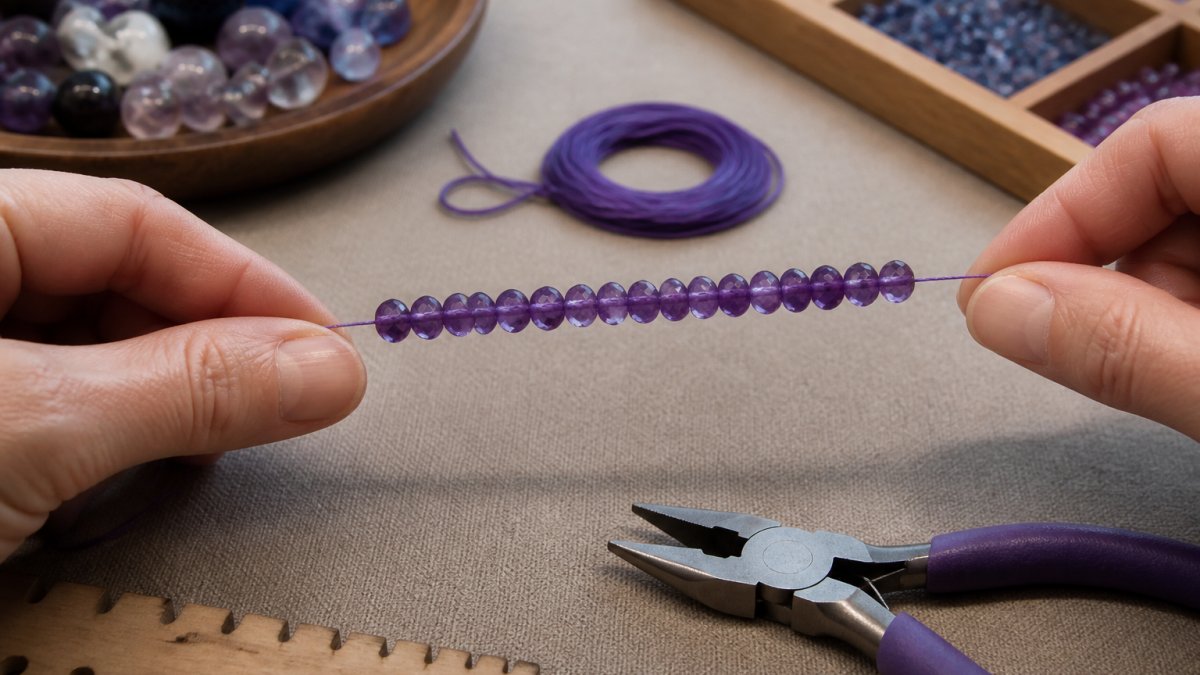
A faceted rondelle is a bead with a flattened, disc-like profile and angled cuts around its edge. That geometry reflects light from multiple directions at once, which is why a single strand can carry an entire bracelet without help from larger stones.

Pro Tip Run your thumb along a strung strand before knotting. If you feel a rough edge catching, that bead's bead hole was drilled slightly off-center, and it will sit crooked against its neighbor.
Pear-Shaped Briolettes: The Graceful Drop for Focal Points
Pear-shaped briolettes are tapered, top-drilled stones that hang as a single drop. They are the fastest way to make a pair of earrings look expensive, because the taper draws the eye downward in one clean line.
Faceted Ovals: Refinement and Visual Elongation
Faceted ovals do something no round bead can: they stretch the eye along the strand. That elongation is the whole point. A necklace of oval beads reads longer and leaner than the same strand in rounds, even at identical carat weight.
Heishi and Disc Beads: Modern Aesthetics Through Layering
Heishi beads are ultra-thin discs, often under 2 mm wide, strung edge to edge. The result is a smooth, liquid-looking strand with almost no visible gaps. Heishi is the shape that made layered bracelets a staple of modern jewelry design.
Watch Out Skip the bead reamer on heishi. The discs are thin enough that reaming widens the hole past the wire gauge, and the strand will sag at that point within a week of wear.
Faceted vs Smooth Gemstone Beads: Which Finish Reads More Elegant
Faceted beads win for sparkle and formal wear. Smooth beads win for understated, everyday elegance. Neither is more "correct," but they signal different things, and mixing them carelessly is what makes a piece look confused.
Why the two finishes read differently
Faceting multiplies light. Every angle cut into the surface becomes a tiny mirror, so a faceted strand catches attention across a room. The cut also breaks up the stone's surface, which means inclusions and color zoning are less visible, a practical advantage when you are working with a natural stone that has visible internal character. Smooth beads, by contrast, show off color and clarity.
The psychology of shape and elegance
Most guides stop at physical attributes. The more useful question is why a shape reads as elegant in the first place. Three factors do most of the work:
Geometric harmony. Shapes with a clear, repeatable axis, ovals, rondelles, teardrops, read as intentional because the eye can predict them. Irregular or asymmetric shapes read as playful or rustic, which is a different signal.
Historical association. The drop, the oval, and the disc have appeared in formal jewelry for centuries, so they carry an inherited sense of occasion. A round bead is neutral; a pear briolette is not.
Visual weight and line. Elongated shapes stretch the eye and read as refined; compact shapes read as sturdy. This is why a strand of ovals looks more formal than the same strand in rounds, even at identical carat weight.
A working rule for mixing finishes
Let one finish lead. If the focal stone is faceted, keep the spacers smooth. If the focal is smooth, faceted spacers add contrast without competing. When two finishes compete at the same visual weight, the eye has nowhere to rest and the piece looks assembled rather than designed.
Key Takeaway Choose finish by lighting, not by trend. Faceted beads perform in dim, warm light; smooth beads hold their color in bright, flat light. If you cannot predict the lighting, choose smooth for the focal and faceted for the accents.
Jewelry Design Techniques for Gemstone Beads: Stringing, Wire Wrapping, and Proportion
Jewelry design techniques for gemstone beads come down to three decisions: how you string, how you secure, and how you balance size. Get those right and the shape does the rest of the work.
Shape-specific stringing: how to keep an elegant drape
Most guides tell you to string beads. Almost none explain how the shape changes the technique. The differences matter:
Rondelles and discs. These sit edge to edge, so the strand's drape depends on consistent thickness. Sort by measured width before stringing; a single thicker bead creates a visible bump. String them flat against each other rather than letting them twist, and check the strand every few inches by holding it up.
Pear briolettes and top-drilled drops. These are not strung on the main strand at all. They hang from a wire or headpin through the narrow end, which means the drape is controlled by the wire gauge, not the bead. Use a wire stiff enough to hold the drop's angle but soft enough to wrap cleanly, most practitioners find 24- to 26-gauge works for small drops, with heavier gauge for larger stones.
Faceted ovals and rounds. These roll, so the strand can twist and the facets can end up facing the wrong way. String them with a slight tension and check orientation as you go; a strand that twists will look crooked even when every bead is uniform.
Cubes and square cuts. The flat faces want to align. If you string them without checking, the strand will rotate and the corners will catch on clothing. String them corner-to-face for a softer line, or face-to-face for a more architectural one.
Wire wrapping and securing
Briolettes and top-drilled drops need a wrapped loop rather than a simple crimp. Wrap two to three times, tuck the tail, and trim flush so nothing snags. For strung strands, use bead wire rated for the weight of your heaviest stone. Faceted beads abrade softer cord over time, so check the wire at the clasp every few wears. Crimp beads should match the wire gauge; an undersized crimp will slip, and an oversized one will not hold.
Proportion and balance
A workable starting ratio is one focal bead to every five to seven smaller beads. Symmetry matters more than exact counts. If the strand looks uneven when you hold it up, it will look worse on a neck. For bracelets, keep the total weight comfortable, a strand that feels heavy on the wrist will not be worn, no matter how elegant it looks on the tray.
The sustainability angle most guides ignore
Shape is not only an aesthetic decision; it is a material one. Cutting a stone into beads always produces waste, and the shape determines how much. Round beads require the most removal because the cutter has to work the stone down to a sphere. Ovals, rondelles, and discs remove less because they follow the stone's natural proportions more closely. Heishi and thin discs can be cut from flatter rough that would be unusable for larger shapes.
Choosing the Best Gemstone Beads for Jewelry Making: A Decision Framework
Choosing the best gemstone beads for jewelry making starts with the wearer and the occasion, not the catalog. Work through these four questions in order:
Is this for daily wear or a special occasion? Daily wear favors smooth finishes and sturdy wire; occasions allow faceted sparkle and finer wire.
What is the focal point? One briolette or one large oval. Everything else supports it.
How much drape do you want? Thin discs and rondelles drape closely; ovals and rounds sit heavier.
Does the finish match the lighting? Faceted for warm, dim rooms; smooth for bright, flat light.
Frequently Asked Questions
Which gemstone bead shapes look the most expensive?
Faceted ovals, pear-shaped briolettes, and diamond rondelles read as the most expensive because they combine elongated silhouettes with light refraction. The elongation and facet count create depth that round beads lack, and pairing them with high-clarity stones like sapphire or lapis lazuli amplifies the effect. These gemstone bead shapes also photograph well for e-commerce listings, which matters if you sell finished pieces online.
How do faceted gemstone beads add elegance to a design?
Faceting cuts multiple flat planes into the bead surface, so light enters and reflects at different angles. That refraction creates sparkle without the bulk of a larger bead. A faceted rondelle, for example, sits flat against the strand yet throws light from every edge. When you compare faceted vs smooth gemstone beads, the faceted version typically reads more formal and catches the eye at a distance, which is why it works well in statement pieces and evening jewelry.
Are briolette beads better for necklaces or earrings?
Both work, but the tapered tip and top-drilled hole make briolettes natural earring drops and pendant focal points. For necklaces, use them as the centerpiece with smaller rondelles or heishi beads as spacers, so the briolette's silhouette stays visible. A 10mm to 12mm briolette holds its own on a chain; anything smaller gets lost in a multi-strand design. Wire wrapping through the top drill hole gives the most secure finish.
How to choose gemstone bead shapes for professional-looking jewelry?
Start with the piece's purpose. A commercial line needs consistent dimensions, so round faceted beads or uniform rondelles reduce waste. A custom commission can justify a briolette or marquise as a focal point. Match bead size to the clasp and wire gauge you plan to use, and keep proportions consistent: a 6mm rondelle next to a 12mm oval creates a deliberate taper, not an accident. Order a small batch first to check drilling quality and color match before committing to a full run.
What is the difference between rondelle and round beads for elegant designs?
A round bead is spherical and symmetrical, so it reflects light evenly from all sides. A rondelle is flattened at the poles, which gives it a wider face and a narrower edge. That flattened profile lets rondelles stack tightly and act as elegant spacers between larger stones, while round beads carry the main visual weight. In a single strand, alternating round and rondelle shapes creates rhythm without adding bulk, which is a common technique in high-end beaded necklaces.
The hardest part of building an elegant piece isn't the design. It's finding a supplier who delivers the same cut, the same drill size, and the same color every time you reorder. HietalaJewelry curates high-quality natural gemstone beads in the shapes that carry elegance, including briolette, rondelle, and marquise, with sale pricing and free delivery within the USA. Browse the collection and start your next design with stones that hold their standard.
Read more


Comments